Pressure Gauge
Manufacturer in India
Bell Engineering & Marketing — precision pressure gauges, temperature gauges and vacuum gauges for every industrial application. 40+ years of manufacturing excellence from Ahmedabad, Gujarat.

Industries Trust Bell's Gauges for a Reason
High accuracy, proven durability and ISO-certified processes — delivering reliable measurement instruments for over four decades.

High-Accuracy Measurement
Precision-engineered Bourdon tube and diaphragm gauges delivering ±0.5% to ±2.5% full-scale accuracy for critical industrial processes.

Durable Long-Life Performance
Stainless steel SS 316, SS 304 and brass internals with corrosion-resistant housings — built for harsh environments.

ISO-Certified Quality System
Manufactured under ISO 9001:2015 with documented calibration procedures, material traceability and test certificates.
Our Pressure Gauge Product Range
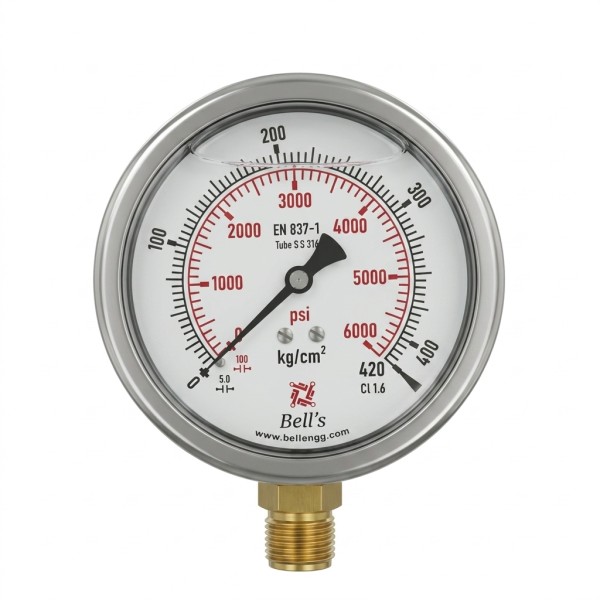
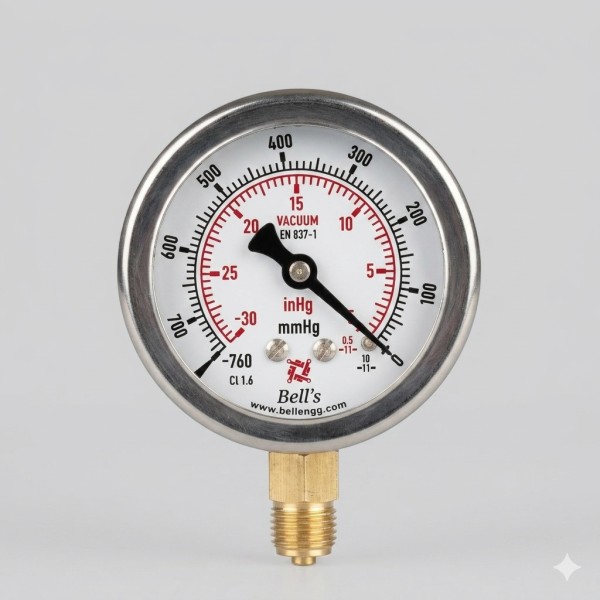
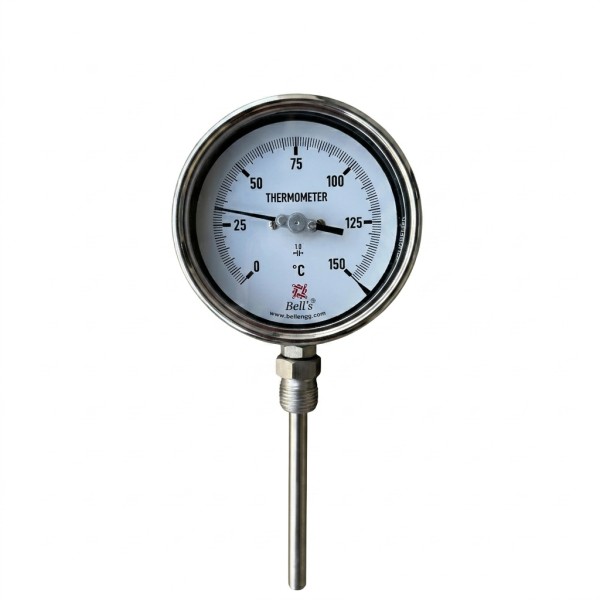
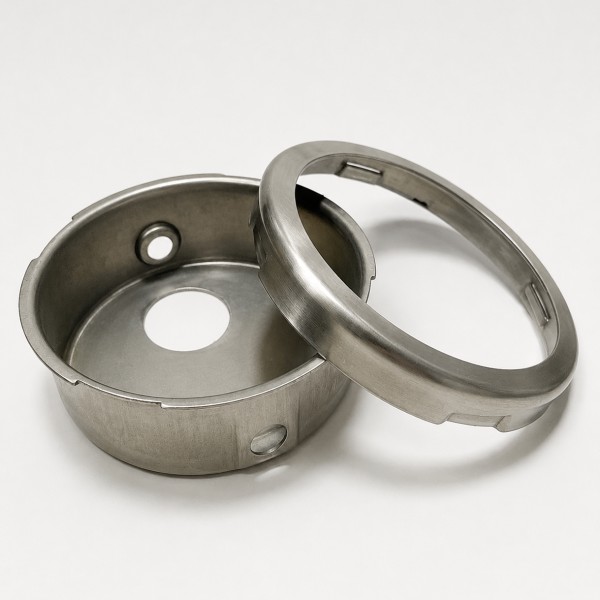
Complete range of industrial measurement instruments — from standard Bourdon tube gauges to specialty diaphragm and digital instruments.


Bell Engineering & Marketing
Founded in 1984 and headquartered in Ahmedabad, Gujarat, Bell Engineering & Marketing is a trusted manufacturer and exporter of pressure gauges, temperature gauges, vacuum gauges and industrial measuring instruments.
Our instruments are manufactured under ISO 9001:2015 with in-house calibration, full material traceability and thorough quality checks.
- ISO 9001:2015 Certified
- In-House Testing & Calibration
- OEM Manufacturing
- Bulk Supply Available
- Pan-India Delivery
- Export to 20+ Countries
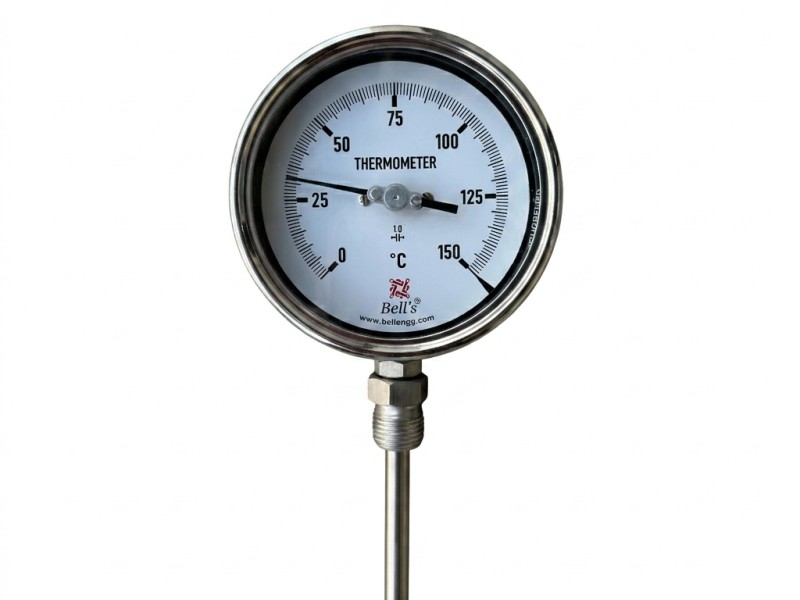
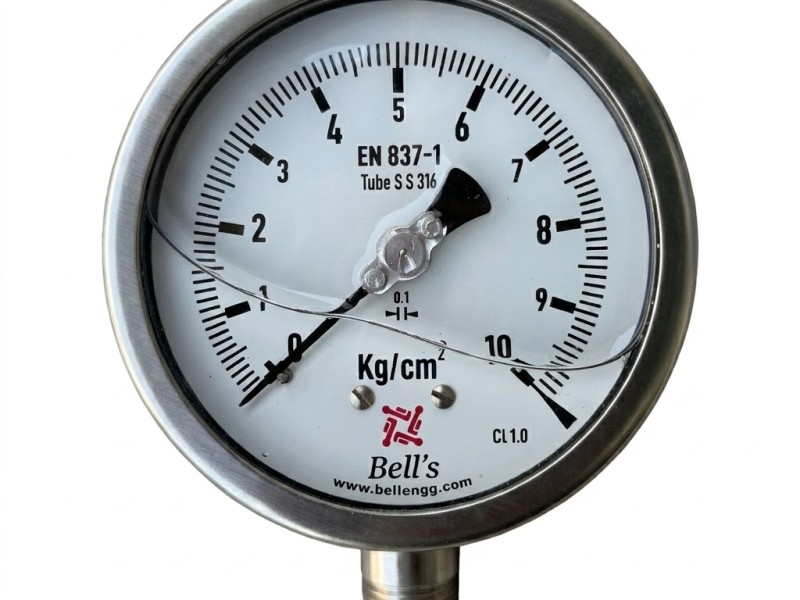
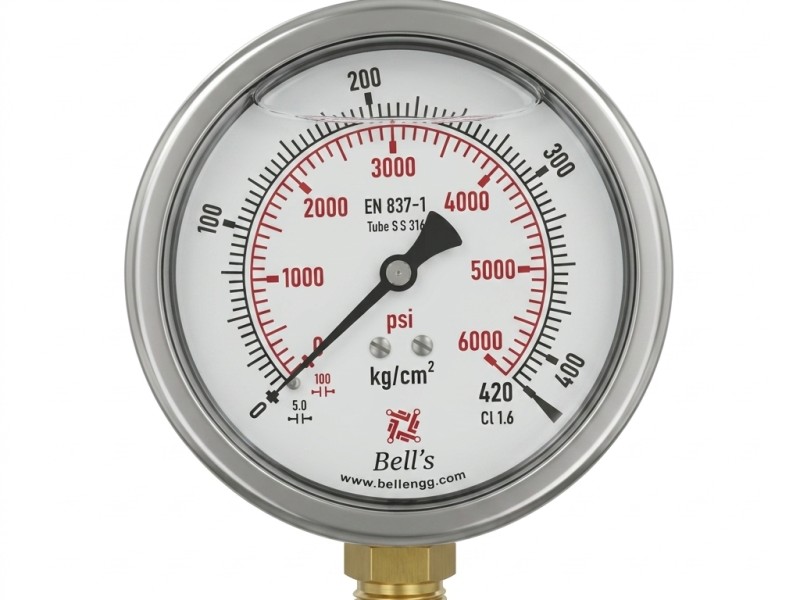
Popular Gauge Products
Most ordered industrial pressure and temperature gauges — in stock and ready for bulk supply or OEM.

Industries We Serve
Bell Engineering gauges operate in demanding environments across every major industrial sector in India and globally.
From Oil & Gas wellheads to pharmaceutical clean-in-place skids, Bell Engineering supplies pressure gauges, temperature gauges and vacuum gauges engineered for each sector's specific pressure range, media and compliance requirements. See our full product range or talk to an engineer about your industry.
Certifications & Standards
Our pressure gauges are manufactured as per EN 837, IS 3624 and ASME B40.100 standards under an ISO 9001:2015 quality system.
 ISO 9001:2015 Certified Quality Management System
 Udyam Registration Certificate
 CE Certification for Pressure Gauges
 ZED Certification
 IP68 Protection Certification
 EN 837-1 Compliance Certificate
ISO 9001:2015 Certified Quality Management System
Udyam Registration Certificate
CE Certification for Pressure Gauges
ZED Certification
IP68 Protection Certification
EN 837-1 Compliance Certificate
EN 837-1 Compliance Certificate
ISO 9001:2015 Certified Quality Management System
Udyam Registration Certificate
CE Certification for Pressure Gauges
ZED Certification
IP68 Protection Certification
EN 837-1 Compliance Certificate
All products shipped with calibration certificates, test reports and material certificates on request.
Pressure Gauge Exporter from India
Bell Engineering regularly exports pressure gauges, temperature gauges and vacuum gauges to the GCC region and beyond.
FOB Mundra/JNPT or CIF GCC port pricing available. Standard delivery: air freight 3–5 days, sea freight 12–18 days.

Export-Ready · Globally Trusted
Everything a procurement manager or overseas distributor needs to know before placing an order with Bell Engineering.
Minimum Order Quantity
No minimum for standard items. OEM/bulk: 50–100 pcs per variant.
Incoterms Supported
EXW · FOB Mundra/JNPT · CIF Jebel Ali / Dammam / Doha · DAP Worldwide.
Lead Time
Stock: 7–14 days. Custom/OEM: 3–5 weeks. Sea to UAE: +5–7 days.
Payment Terms
T/T · LC at sight · 50% advance + 50% before dispatch. USD / EUR / INR.
HS Code
Pressure Gauges: 9026.20 · Temperature: 9025.19 · Certificate of Origin provided.
Export Packaging
Individual foam-lined boxes. Wooden crates for bulk. Seaworthy standard.
Countries Served
UAE · Saudi · Qatar · Kuwait · Oman · Bahrain · USA · Philippines · Vietnam + more.
Documents Provided
Invoice · Packing List · COO · Test Certificate · Calibration Certificate on request.
Pressure Gauge Applications Across Industries
Bell Engineering pressure gauges, temperature gauges and vacuum gauges are engineered for accurate, repeatable measurement in the process lines, rotating equipment and utility systems below.
Oil & Gas / Petrochemical
Wellhead monitoring, pipeline pressure, separator vessels and refinery process lines — with SS316 wetted parts, liquid-filled dampening and ATEX/Ex-proof options for hazardous zones.
Chemical & Fertilizer Plants
Corrosive-media applications using diaphragm seals, Monel or PTFE-lined wetted parts and chemical-seal isolation to protect the Bourdon tube from aggressive process fluids.
Boilers & Power Plants
High-temperature steam and feedwater pressure measurement with syphon-protected connections, safety pattern (solid-front) dials and IBR-approved gauges.
Compressors, Hydraulics & Pneumatics
Vibration-resistant liquid-filled gauges for compressor discharge lines, hydraulic power packs and pneumatic control panels, rated for pulsating pressure service.
Water Treatment & HVAC
Pump suction/discharge, filter differential pressure and chiller/AHU monitoring — brass or SS gauges sized for panel-mount and pipe-mount installation.
Pharmaceutical & Food Processing
Sanitary/hygienic diaphragm gauges in SS316L for clean-in-place (CIP) skids, autoclaves and process vessels requiring crevice-free wetted surfaces.
Steel & Textile Plants
Rugged gauges for hydraulic descaling systems, rolling mills, dyeing and finishing lines that see high ambient heat, dust and continuous vibration.
OEM Panel & Skid Builders
Custom dial branding, connection size and range as per drawing, supplied in bulk with consistent lead times for OEM control panels and skid-mounted systems.
Pressure Gauge Buying & Selection Guide
Choosing the right pressure gauge prevents premature failure and inaccurate readings. Work through these steps before placing an order — our engineers are also happy to review your application over a call.
Select a range where normal operating pressure falls at roughly 50–75% of full scale for maximum gauge life.
±1.6% for general industrial use, ±1.0% or better for custody transfer, test and calibration duties.
Brass for air/water/oil, SS316 for corrosive or food-grade media, Monel/PTFE-lined for aggressive chemicals.
Common dial sizes are 2", 2.5", 4" and 6"; connection as per BSP, NPT or flanged process fitting.
Bottom or back connection, panel/surface/pipe mounting, with liquid-filled movement where vibration or pulsation is present.
Specify ATEX/Ex-proof, high-ambient-temperature or IBR-approved variants for hazardous, hot or boiler applications.

Accuracy, Materials & Standards
Engineering-focused specifications so procurement and design teams can validate our gauges against project requirements.
Accuracy Classes
Available in ±2.5%, ±1.6%, ±1.0% and ±0.5% full-scale accuracy classes as per EN 837-1 and ASME B40.100 grades 2A/3A/4A, tested against dead-weight tester references.
Bourdon Tube & Case Materials
Phosphor bronze and SS316 Bourdon tubes; case materials include ABS, mild steel and stainless steel 304/316 with weatherproof (IP65) sealing.
Standards & Compliance
Manufactured to EN 837-1, IS 3624, ASME B40.100 and DIN 16006 requirements, with CE marking and PED-compliant documentation available on request.
Pressure Range & Units
Ranges from full vacuum to 1000 kg/cm² (bar, psi, kPa, MPa), including compound vacuum-pressure gauges and differential pressure gauges.
Advantages of Bell Gauges
Consistent batch-to-batch accuracy, corrosion-resistant construction, longer service life and traceable calibration — reducing downtime and re-order costs for OEMs and plant buyers.
Maintenance & Common Failures
Pointer drift, pulsation fatigue and case fogging are typically prevented with correct range selection, liquid-filled movements and periodic recalibration every 6–12 months.
Our Manufacturing Process
Every Bell Engineering gauge passes through a controlled, documented production flow from raw material to dispatch.

In-House Quality Testing & Calibration
Every gauge is tested on our in-house dead-weight tester and hydraulic/pneumatic calibration rig before dispatch, checking accuracy at multiple points across the full scale.
Calibration certificates, material test certificates and batch traceability documentation are issued on request — supporting your ISO, IATF or plant QA audit requirements.
- Dead-Weight Tester Calibration
- 100% Pre-Dispatch Testing
- Material Traceability
- Calibration Certificate on Request
Installation, Maintenance & Troubleshooting
Correct installation and periodic maintenance are what actually determine how long a pressure gauge stays accurate in the field.
Installation Best Practices
Mount vertically where possible, use a syphon on steam lines, isolate from pulsation with a snubber, and avoid over-tightening on the process connection thread.
Routine Maintenance
Visually inspect the dial and case for damage monthly; recalibrate every 6–12 months; replace the liquid fill if it discolours or the case fogs.
Common Failure: Pointer Drift
Usually caused by over-range pressure spikes or Bourdon tube fatigue — select a range where operating pressure sits at 50–75% of full scale to prevent it.
Common Failure: Case Fogging
Indicates a damaged case seal or a failed liquid-filled movement — replace the gauge rather than attempting field repair on sealed movements.
Common Failure: Zero Shift
A reading that no longer returns to zero at atmospheric pressure signals Bourdon tube fatigue or mechanical wear — recalibrate or replace.
When to Replace vs Recalibrate
Recalibrate if the gauge still tracks linearly but has drifted; replace if there is visible tube damage, case ingress, or the gauge fails at more than one test point.
Pressure Gauge Technical Reference Tables
Common dial sizes, pressure ranges, accuracy classes, connection types and materials we manufacture — for quick datasheet cross-checking.
Dial Sizes
| 40 mm | Compact / panel-mount |
| 50 mm | General purpose |
| 63 mm | General purpose |
| 100 mm | Most common industrial size |
| 150 mm | High-visibility panels |
| 250 mm | Test benches / control rooms |
Pressure Range & Units
| Vacuum | Full vacuum to compound |
| Bar | 0–1 bar up to 1000+ bar |
| PSI | 0–15 psi up to 15,000+ psi |
| kg/cm² | Standard Indian industrial unit |
| MPa | High-pressure hydraulic systems |
Accuracy Classes
| ±0.5% | Test / calibration grade |
| ±1.0% | Custody transfer, precision process |
| ±1.6% | General industrial (most common) |
| ±2.5% | Utility / non-critical service |
Connection Types
| Bottom | Vertical pipe/panel mounting |
| Back | Panel & surface mounting |
| Panel | Front-flange, flush panel fit |
Wetted-Part Materials
| Brass | Air, water, oil, non-corrosive |
| SS304 | Mild corrosive / general chemical |
| SS316 | Corrosive, food-grade, marine |
| Monel | Highly aggressive / hydrofluoric media |
Pressure Gauge Comparisons
Quick answers to the trade-off questions we get asked most often during technical discussions.
Dry vs Glycerine-Filled
Dry gauges suit clean, low-vibration duty. Glycerine/liquid-filled gauges dampen needle flutter and resist moisture ingress — the default choice for compressors, pumps and pulsating lines.
Bourdon Tube vs Capsule Element
Bourdon tubes handle medium-to-high pressure (gas or liquid). Capsule elements are more sensitive and suited to very low pressure and draft-range measurement.
Digital vs Analog Gauges
Analog gauges are rugged, need no power and are the industrial default. Digital gauges add higher resolution and data output where instrumentation systems require it.
Bottom Entry vs Back Entry
Bottom entry suits vertical pipe-mounted installation and direct line-of-sight reading. Back entry suits panel-mounted gauges viewed from the front of a control panel.
SS304 vs SS316
SS304 is cost-effective for mildly corrosive, general industrial media. SS316 adds molybdenum for superior resistance to chlorides and aggressive chemicals — the standard for coastal, marine and process-chemical duty.
Compound vs Vacuum Gauge
A vacuum gauge reads sub-atmospheric pressure only. A compound gauge reads both vacuum and positive pressure on a single dial — used where a system swings between the two.
Need Technical Help? Talk to Our Engineer
Send us your operating pressure, media and connection details — our engineering team will recommend the right gauge and share a quotation within 24 hours.
Frequently Asked Questions
Straight answers to the questions engineers and procurement teams ask most often about pressure gauges and ordering from Bell Engineering.
What is a pressure gauge and how does it work?
A pressure gauge is an instrument that measures the pressure of a gas or liquid in a closed system. Most industrial gauges use a curved Bourdon tube that straightens slightly as internal pressure rises; this movement is transferred through a gear mechanism to a pointer on a calibrated dial, giving a direct visual reading.
Where are pressure gauges used?
Pressure gauges are used across Oil & Gas, Chemical, Petrochemical, Boiler, Compressor, Hydraulic, Pneumatic, Water Treatment, HVAC, Power Plant, Pharmaceutical, Food Processing, Textile and Steel industries — anywhere process, utility or safety pressure needs to be monitored.
How do I select the right pressure gauge for my application?
Match the gauge to your operating pressure range (aim for 50–75% of full scale), required accuracy class, process media compatibility (wetted-part material), connection size/type, dial size and environmental factors such as vibration, pulsation or hazardous area classification.
What accuracy classes does Bell Engineering offer?
We manufacture gauges in ±2.5%, ±1.6%, ±1.0% and ±0.5% full-scale accuracy classes as per EN 837-1 and ASME B40.100, suitable for general industrial use through to precision test and calibration duties.
What materials are used in Bell Engineering pressure gauges?
Bourdon tubes are manufactured in phosphor bronze or SS316; cases are available in ABS, mild steel or stainless steel 304/316, with brass, SS316, Monel or PTFE-lined wetted parts selected according to the process media.
Which standards do your gauges comply with?
Our gauges are manufactured as per EN 837-1, IS 3624, ASME B40.100 and DIN 16006, with ISO 9001:2015 certified quality processes, and CE/PED documentation available on request.
How often should a pressure gauge be calibrated?
For most industrial applications we recommend recalibration every 6 to 12 months, or more frequently in high-vibration, pulsating or safety-critical service, to catch pointer drift before it affects process readings.
Do you supply pressure gauges for export and OEM orders?
Yes. We regularly export to UAE, Saudi Arabia, Qatar, Kuwait, Oman, Bahrain, the USA and Europe with full documentation, and supply OEM/bulk orders with custom dial branding, ranges and connections as per drawing.
Factory, Team & Process Gallery
A look inside Bell Engineering — our manufacturing facility, quality testing lab and processes.




